




The navigator said to the engineer,
I think our radio's dead.
I can hear but I can't send,
And there's bad weather ahead.
The pilot said to the co-pilot,
Our right engine's gone.
But if we can make it over these mountains,
Perhaps I can set her down.
All my children of the sun!
Five hundred miles from nowhere
We bellylanded on a river.
We bid a quick goodbye
To that ship of silver.
Twenty-five piled out the window,
Twenty reached the shore.
We turned to see our metal bird
Sink to rise no more.
All my children of the sun!
We found some floating logs,
We found some sharp stones,
We cut some vines and made a raft.
It was our only hope.
The navigator said he thought there was
A town somewhere downstream.
So now each tried to do his best
To paddle as a team.
All except one young guy
Who kept arguing with the navigator.
He said he'd read about a waterfall
We would come to sooner or later.
At a river's bend he persuaded us
To bring our craft to beach.
But a search party found the river smooth
As far as eye could reach.
All my children of the sun.
Once again he persuaded us to stop.
We cursed at the delay.
Once again we found the river
Flowing on the same old way.
We said, shut up your arguing.
You give us all a pain.
Why don't you pitch in and go your part--
Be constructive for a change?
All my children of the sun.
Still egghead kept on talking
In the same longwinded way,
We said, if you won't paddle,
Get the hell out of our way.
We told him to go sit
Far back at the stern.
Then we strained to paddle harder,
And then the river made a turn.
All my children of the sun.
One paddler heard sound of tapping
And what he saw, when he did turn,
Was egghead with a sharp stone,
Cutting the vines that bound the stern.
With a cry of rage the paddler
Leaped up to his feet,
He swung his long pole
Knocked egghead into the deep.
But now the logs were splaying out.
The raft had come unbound.
Like mad we paddled for the shore,
Before all would drown.
All my children of the sun.
A search party went out to find more vines
To tie the raft up tight.
In twenty minutes they returned,
Their faces pale with fright.
They said a quarter mile down river
We DID find a waterfall.
It's over a hundred feet in height.
It would have killed us all.
All my children of the sun.
And that is why on the banks
Of a far off wilderness stream,
Which none of us, none of us,
Will ever see again,
There stands a cross for someone,
Hardly older than a boy.
Who, we thought, was only
Trying to destroy.
All my children of the sun
Pete Seeger (1919-2014) était un chanteur, musicien et activiste américain de renommée mondiale. Né à New York dans une famille d'artistes, Seeger s'est distingué par sa voix puissante et son engagement social. Il a commencé sa carrière dans les années 1930 avec des groupes folk comme The Almanac Singers, promouvant des thèmes de justice sociale et combattant les injustices. Pendant les années 1950, Seeger est devenu un symbole de la musique folk américaine, influençant des générations d'artistes par son style direct et engageant. Sa chanson la plus célèbre, "Where Have All the Flowers Gone?", est devenue un hymne pour la paix et contre la guerre. Il a également contribué à la naissance du mouvement écologiste dans les années 1960 avec des chansons comme "If I Had a Hammer". Seeger a été souvent critiqué pour ses opinions politiques pendant la Guerre Froide, mais il est resté une icône de la musique folk américaine jusqu'à sa mort en 2014. Parmi ses albums les plus importants figurent "American Industrial Ballads" (1956) et "Rainbow Race" (1963). Certaines de ses chansons les plus représentatives sont : "Where Have All the Flowers Gone?", "If I Had a Hammer", "Turn! Turn! Turn!" et "Guantanamera".

 Kevin Devine
 Roger Miller
 Luke Reynolds
 Doctor Deseo
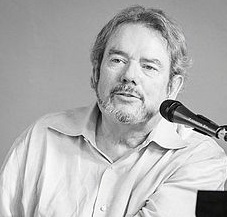 Jimmy Webb
 Visqueen
 Gabriel Garzón-Montano
 Watashi Wa
 Jennifer Warnes
 Trick Pony
 Machinedrum
 Jeffree Star