




English is the most widely spoken language in the history of the planet.
One out of every seven human beings can speak or read it.
Half the world's books, 3/4 of the international mail are in English.
It has the largest vocabulary, perhaps two million words,
And a noble body of literature. But face it:
English is cuh-ray-zee!
Just a few examples: There's no egg in eggplant, no pine or apple in pineapple.
Quicksand works slowly; boxing rings are square.
A writer writes, but do fingers fing?
Hammers don't ham, grocers don't groce. Haberdashers don't haberdash.
English is cuh-ray-zee!
If the plural of tooth is teeth, shouldn't the plural of booth be beeth?
It's one goose, two geese. Why not one moose, two meese?
If it's one index, two indices; why not one Kleenex,two Kleenices?
English is cuh-ray-zee!
You can comb through the annals of history, but not just one annal.
You can make amends, but not just one amend.
If you have a bunch of odds and ends and get rid of all but one, is it an odd or an end?
If the teacher taught, why isn't it true that a preacher praught?
If you wrote a letter, did you also bote your tongue?
And if a vegetarian eats vegetables, what does a humanitarian eat?
English is cuh-ray-zee!
Why is it that night falls but never breaks and day breaks but never falls?
In what other language do people drive on the parkway and park on the driveway?
Ship by truck but send cargo by ship? Recite at a play but play at a recital?
Have noses that run and feet that smell?
English is cuh-ray-zee!
How can a slim chance and a fat chance be the same
When a wise man and a wise guy are very different?
To overlook something and to oversee something are very different,
But quite a lot and quite a few are the same.
How can the weather be hot as hell one day and cold as hell the next?
English is cuh-ray-zee!
You have to marvel at the lunacy of a language in which your house can burn down
While it is burning up. You fill out a form by filling it in.
In which your alarm clock goes off by going on.
If pro is the opposite of con, what is the opposite of progress?
Well, English was invented by people, not computers
And reflects the creativity of the human race.
So that's why when the stars are out, they're visible,
But when the lights are out, they're invisible.
When I wind up my watch I start it, but when I wind up this rap,
I end it. English is cuh-ray-zee!
Pete Seeger (1919-2014) était un chanteur, musicien et activiste américain de renommée mondiale. Né à New York dans une famille d'artistes, Seeger s'est distingué par sa voix puissante et son engagement social. Il a commencé sa carrière dans les années 1930 avec des groupes folk comme The Almanac Singers, promouvant des thèmes de justice sociale et combattant les injustices. Pendant les années 1950, Seeger est devenu un symbole de la musique folk américaine, influençant des générations d'artistes par son style direct et engageant. Sa chanson la plus célèbre, "Where Have All the Flowers Gone?", est devenue un hymne pour la paix et contre la guerre. Il a également contribué à la naissance du mouvement écologiste dans les années 1960 avec des chansons comme "If I Had a Hammer". Seeger a été souvent critiqué pour ses opinions politiques pendant la Guerre Froide, mais il est resté une icône de la musique folk américaine jusqu'à sa mort en 2014. Parmi ses albums les plus importants figurent "American Industrial Ballads" (1956) et "Rainbow Race" (1963). Certaines de ses chansons les plus représentatives sont : "Where Have All the Flowers Gone?", "If I Had a Hammer", "Turn! Turn! Turn!" et "Guantanamera".

 Fuel
 Khruangbin
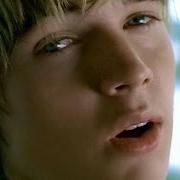 Jesse Mccartney
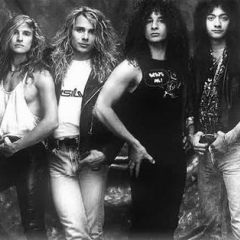 White Lion
 Greyson Chance
 Emma Roberts
 Punchline
 Wye Oak
 Genitorturers
 Frank'S Enemy
 Eddie Kendricks
 Pain Teens