




John Henry was about three days old,
sittin' on his papa's knee.
He picked up a hammer and a little piece of steel;
said, "Hammer's gonna be the death of me, Lord, Lord.
Hammer's gonna be the death of me."
The captain said to John Henry
"Gonna bring that steam drill 'round.
Gonna bring that steam drill out on the job.
Gonna whop that steel on down. Down,
Down.
Whop that steel on down."
John Henry told his captain,
"A man ain't nothin' but a man,
But before I let your steam drill beat me
down,
I'd die with a hammer in my hand. Lord,
Lord.
I'd dies with a hammer in my hand."
John Henry said to his shaker,
"Shaker, why don't you sing?
I'm throwin' thirty pounds from my hips on
down.
Just listen to that cold steel ring. Lord, Lord.
Listen to that cold steel ring."
The man that invented the stream drill
Thought he was mighty fine,
But John Henry made fifteen feet;
The steam drill only made nine. Lord, Lord.
The steam drill only made nine.
John Henry hammered in the mountain
His hammer was striking fire.
But he worked so hard, he broke his poor
heart.
He laid down his hammer and he died. Lord,
Lord.
He laid down his hammer and he died.
John Henry had a little woman.
Her name was Polly Ann.
John Henry took sickand went to his bed.
Polly Ann drove steel like a man. Lord,
Lord.
Polly Ann drove steel like a man.
John Henry had a little baby.
You could hold him in the palm of your
hand.
The last words I heard that poor boy say,
"My daddy was steel-driving man. Lord,
Lord.
My daddy was a steel-driving."
Well, every Monday morning
When the bluebirds begin to sing.
You can hear John Henry a mile or more.
You can hear John Henry's hammer ring.
Lord, Lord.
You can hear John Henry's hammer ring.
Pete Seeger (1919-2014) était un chanteur, musicien et activiste américain de renommée mondiale. Né à New York dans une famille d'artistes, Seeger s'est distingué par sa voix puissante et son engagement social. Il a commencé sa carrière dans les années 1930 avec des groupes folk comme The Almanac Singers, promouvant des thèmes de justice sociale et combattant les injustices. Pendant les années 1950, Seeger est devenu un symbole de la musique folk américaine, influençant des générations d'artistes par son style direct et engageant. Sa chanson la plus célèbre, "Where Have All the Flowers Gone?", est devenue un hymne pour la paix et contre la guerre. Il a également contribué à la naissance du mouvement écologiste dans les années 1960 avec des chansons comme "If I Had a Hammer". Seeger a été souvent critiqué pour ses opinions politiques pendant la Guerre Froide, mais il est resté une icône de la musique folk américaine jusqu'à sa mort en 2014. Parmi ses albums les plus importants figurent "American Industrial Ballads" (1956) et "Rainbow Race" (1963). Certaines de ses chansons les plus représentatives sont : "Where Have All the Flowers Gone?", "If I Had a Hammer", "Turn! Turn! Turn!" et "Guantanamera".

 Rival Schools
 Mann
 Centro-Matic
 Dog'S Eye View
 Johnny Nash
 Sasha Gradiva
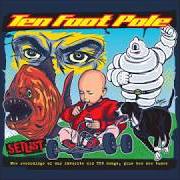 Ten Foot Pole
 Trent Willmon
 Montgomery Gentry
 Tim Hardin
 The Cheetah Girls
 Conway The Machine