




If you want higher wages, let me tell you what to do;
You got to talk to the workers in the shop with you;
You got to build you a union, got to make it strong,
But if you all stick together, now, 'twont he long.
You'll get shorter hours,
Better working conditions.
Vacations with pay,
Take your kids to the seashore.
It ain't quite this simple, so I better explain
Just why you got to ride on the union train;
'Cause if you wait for the boss to raise your pay,
We'll all be waiting till Judgment Day;
We'll all he buried - gone to Heaven -
Saint Peter'll be the straw boss then.
Now, you know you're underpaid, hut the boss says you ain't;
He speeds up the work till you're 'bout to faint,
You may he down and out, but you ain't beaten,
Pass out a leaflet and call a meetin'
Talk it over - speak your mind -
Decide to do something about it.
'Course, the boss may persuade some poor damn fool
To go to your meeting and act like a stool;
But you can always tell a stool, though - that's a fact;
He's got a yellow streak running down his back;
He doesn't have to stool - he'll always make a good living
On what he takes out of blind men's cups.
You got a union now; you're sitting pretty;
Put some of the boys on the steering committee.
The boss won't listen when one man squawks.
But he's got to listen when the union talks.
He better -
He'll be mighty lonely one of these days.
Suppose they're working you so hard it's just outrageous,
They're paying you all starvation wages;
You go to the boss, and the boss would yell,
"Before I'd raise your pay I'd see you all in Hell."
Well, he's puffing a big see-gar and feeling mighty slick,
He thinks he's got your union licked.
He looks out the window, and what does he see
But a thousand pickets, and they all agree
He's a bastard - unfair - slave driver -
Bet he beats his own wife.
Now, boy, you've come to the hardest time;
The boss will try to bust your picket line.
He'll call out the police, the National Guard;
They'll tell you it's a crime to have a union card.
They'll raid your meeting, hit you on the head.
Call every one of you a goddamn Red -
Unpatriotic - Moscow agents -
Bomb throwers, even the kids.
But out in Detroit here's what they found,
And out in Frisco here's what they found,
And out in Pittsburgh here's what they found,
And down in Bethlehem here's what they found,
That if you don't let Red-baiting break you up,
If you don't let stool pigeons break you up,
If you don't let vigilantes break you up,
And if you don't let race hatred break you up -
You'll win. What I mean,
Take it easy - but take it!
Pete Seeger (1919-2014) était un chanteur, musicien et activiste américain de renommée mondiale. Né à New York dans une famille d'artistes, Seeger s'est distingué par sa voix puissante et son engagement social. Il a commencé sa carrière dans les années 1930 avec des groupes folk comme The Almanac Singers, promouvant des thèmes de justice sociale et combattant les injustices. Pendant les années 1950, Seeger est devenu un symbole de la musique folk américaine, influençant des générations d'artistes par son style direct et engageant. Sa chanson la plus célèbre, "Where Have All the Flowers Gone?", est devenue un hymne pour la paix et contre la guerre. Il a également contribué à la naissance du mouvement écologiste dans les années 1960 avec des chansons comme "If I Had a Hammer". Seeger a été souvent critiqué pour ses opinions politiques pendant la Guerre Froide, mais il est resté une icône de la musique folk américaine jusqu'à sa mort en 2014. Parmi ses albums les plus importants figurent "American Industrial Ballads" (1956) et "Rainbow Race" (1963). Certaines de ses chansons les plus représentatives sont : "Where Have All the Flowers Gone?", "If I Had a Hammer", "Turn! Turn! Turn!" et "Guantanamera".

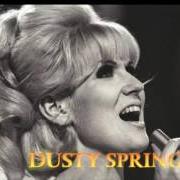 Burt Bacharach
 Richard Swift
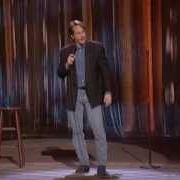 Jeff Foxworthy
 Greenskeepers
 Buddy Knox
 Frozen
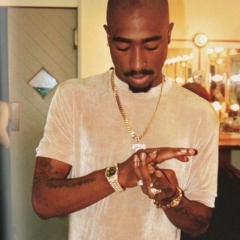 2Pac
 Jeannie Seely
 Confide
 Tamela Mann
 Heather Headley
 Love And Theft