




[Chorus:]
We'll all be a-doubling, a-doubling, a-doubling
We'll all be a-doubling in thirty-two years.
We'll all be a-doubling, a-doubling, a-doubling
We'll all be a-doubling in thirty-two years.
Two times two is four!
Two times four is eight!
Two times eight is sixteen
And the hour is getting late!
Two times sixteen is thirty-two,
Twice that is sixty-four;
Next comes a hundred twenty-eight,
And do you want to hear more?
Next comes two hundred fifty-six,
Twice that five hundred and twelve;
Next, one thousand twenty-four,
Just figure it out yourself.
Keep doubling ten generations,
You can have children over a million.
Keep going another twenty,
Your children would be over a trillion.
Give it another three hundred years,
Your children number a billion;
Keep doubling another millennium,
You can have another quadrillion.
For two thousand years we been praying
O Lord, deliver me please.
The Lord helps them that helps themselves
We better get off our knees.
Either people are going to have to get smaller
Or the world's going to have to get bigger;
Or there's a couple other possibilities,
I'll leave it to you to figure.
I know I shouldn't a been born!
I was my mama's third child;
But now I'm hollering around the world,
And I drive the Birchers wild!
Pete Seeger (1919-2014) était un chanteur, musicien et activiste américain de renommée mondiale. Né à New York dans une famille d'artistes, Seeger s'est distingué par sa voix puissante et son engagement social. Il a commencé sa carrière dans les années 1930 avec des groupes folk comme The Almanac Singers, promouvant des thèmes de justice sociale et combattant les injustices. Pendant les années 1950, Seeger est devenu un symbole de la musique folk américaine, influençant des générations d'artistes par son style direct et engageant. Sa chanson la plus célèbre, "Where Have All the Flowers Gone?", est devenue un hymne pour la paix et contre la guerre. Il a également contribué à la naissance du mouvement écologiste dans les années 1960 avec des chansons comme "If I Had a Hammer". Seeger a été souvent critiqué pour ses opinions politiques pendant la Guerre Froide, mais il est resté une icône de la musique folk américaine jusqu'à sa mort en 2014. Parmi ses albums les plus importants figurent "American Industrial Ballads" (1956) et "Rainbow Race" (1963). Certaines de ses chansons les plus représentatives sont : "Where Have All the Flowers Gone?", "If I Had a Hammer", "Turn! Turn! Turn!" et "Guantanamera".

 Jimmy Scott
 Rickie Lee Jones
 Racer X
 Surface
 Bart Crow Band
 Sean Brown
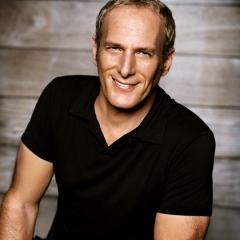 Michael Bolton
 Divine Empire
 Buffalo Springfield
 Fatty Koo
 Richie Sambora
 Alove For Enemies