





Early in the morning, I first see the sun,
I say a little prayer for the world.
I hope all the little children live a long, long time
Yes, every little boy and little girl.
I hope they learn to laugh at the way
Some precious old words do seem to change,
'Cause that's what life is all about:
To arrange and re-arrange and re-arrange.
[Chorus:]
Oh-wee, oh-wye, to re-arrange and re-arrange and re-arrange.
Oh-wee, oh-wye, to re-arrange and re-arrange and re-arrange.
Early in the mornin' I'm a-carrying the sap
And I say a little prayer for the maple.
Like old Mama Quad, on the northwest slope,
I'll protect her 'long as I am able.
She gives me more sap year after year,
Than any single other tree,
So bring on the pancakes! Here's to Mama Quad!
May she live for another century.
[Chorus]
Sometimes I wake in the middle of the night
And rub my achin' old eyes.
Is that a voice from inside-a my head
Or does it come down from the skies?
"There's a time to laugh but there's a time to weep,
And a time to make a big change."
Wake-up-you-bum-the-time-has-come
To arrange and re-arrange and re-arrange.
[Chorus]
Maybe the biggest change will come
When we don't have to change much at all.
When maniacs holler, "GROW, GROW, GROW!"
We can chose to stay small.
The key word may be "little."
We only have to change a little bit.
So eat a little food, drink a little drink;
And only have to . . . (sigh)
[Repeat first verse]
[Chorus 2x]
Pete Seeger (1919-2014) était un chanteur, musicien et activiste américain de renommée mondiale. Né à New York dans une famille d'artistes, Seeger s'est distingué par sa voix puissante et son engagement social. Il a commencé sa carrière dans les années 1930 avec des groupes folk comme The Almanac Singers, promouvant des thèmes de justice sociale et combattant les injustices. Pendant les années 1950, Seeger est devenu un symbole de la musique folk américaine, influençant des générations d'artistes par son style direct et engageant. Sa chanson la plus célèbre, "Where Have All the Flowers Gone?", est devenue un hymne pour la paix et contre la guerre. Il a également contribué à la naissance du mouvement écologiste dans les années 1960 avec des chansons comme "If I Had a Hammer". Seeger a été souvent critiqué pour ses opinions politiques pendant la Guerre Froide, mais il est resté une icône de la musique folk américaine jusqu'à sa mort en 2014. Parmi ses albums les plus importants figurent "American Industrial Ballads" (1956) et "Rainbow Race" (1963). Certaines de ses chansons les plus représentatives sont : "Where Have All the Flowers Gone?", "If I Had a Hammer", "Turn! Turn! Turn!" et "Guantanamera".

 Vicci Martinez
 Stick To Your Guns
 Lil Scrappy
 Tonya Mitchell
 Agent Steel
 Depswa
 Slint
 Lee Dorsey
 Amanda Brown
 The Woods
 Leon Russell
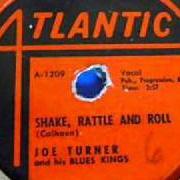 Big Joe Turner